
Plenary Lecture
2016 Nobel Prize in Chemistry
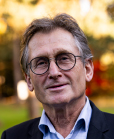
Ben L. Feringa, PhD
University of Groningen
Ben L. Feringa obtained his PhD degree at the University of Groningen in the Netherlands under the guidance of Professor Hans Wynberg. After working as a research scientist at Shell in the Netherlands and the UK, he was appointed lecturer and in 1988 full professor at the University of Groningen and named the Jacobus H. van ‘t Hoff Distinguished Professor of Molecular Sciences in 2004.
He was elected Foreign Honorary member of the American Academy of Arts and Sciences. He is a member of the Royal Netherlands Academy of Sciences. In 2008 he was appointed Academy Professor and he was knighted by Her Majesty the Queen of the Netherlands.
Feringa’s research has been recognized with numerous awards including the Körber European Science Award (2003), the Spinoza Award (2004), the Prelog gold medal (2005), the Norrish Award of the ACS (2007), the Paracelsus medal (2008), the Chirality medal (2009), the RSC Organic Stereochemistry Award (2011), the Humboldt award (2012), the Nagoya gold medal (2013), the ACS Cope Scholar Award (2015), the Chemistry for the Future Solvay Prize (2015), the August-Wilhelm-von-Hoffman Medal (2016), the 2016 Nobel prize in Chemistry, the Tetrahedron Prize (2017) and the European Chemistry Gold Medal (2018).
In 2019 he was elected as a member of the European Research Council and a Foreign Member of the US National Academy, USA, and in 2020 as a Foreign Member Royal Society (London) UK.
Feringa’s research interests include stereochemistry, organic synthesis, asymmetric catalysis, molecular switches and motors, self-assembly, molecular nanosystems and photo pharmacology.
In progress.
Plenary Lecture
Check back soon for the date, time, and location.
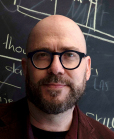
Alán Aspuru-Guzik, PhD, MCIC
University of Toronto
Alán Aspuru-Guzik is a Professor at the University of Toronto, with primary appointments in the Departments of Chemistry and Computer Science and cross-appointments in Chemical Engineering and Applied Chemistry, Materials Science and Engineering, and the Institute of Medical Science. He is CIFAR AI Chair at the Vector Institute for Artificial Intelligence, Director of the Acceleration Consortium, and Co-Director of the CIFAR Accelerated Decarbonization program. He is Editor-in-Chief of the Royal Society of Chemistry journal Digital Discovery and Fellow of the Royal Society of Canada.
Alán began his independent career at Harvard University in 2006 and was a full professor there from 2013 to 2018. He received his B.Sc. from the National Autonomous University of Mexico (UNAM) in 1999 and his PhD from the University of California, Berkeley in 2004, where he joined as a postdoctoral fellow from 2005 to 2006.
Alán’s research spans quantum information, machine learning, and chemistry. He pioneered algorithms and experimental implementations of quantum computers and quantum simulators for chemical systems, studied quantum coherence in photosynthetic energy transfer, and accelerated the discovery of organic semiconductors, photovoltaics, batteries, and light-emitting diodes. He has also advanced molecular representations and generative models for learning molecular properties. His current research focuses on automation, autonomous chemical laboratories, and AI Scientists, particularly the El Agente project.
In progress.
Plenary Lecture
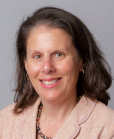
Rebecca T. Ruck, PhD
Merck & Co., Inc.
Rebecca T. Ruck (she/her/hers) is an Associate Vice President at Merck, where she leads the Development Sciences & Clinical Supply Digital Technologies group, a team dedicated to driving solutions through automation tools, data democratization, AI & predictive science. She previously delivered impactful innovations in Process R&D Enabling Technologie, including the application of a biocatalytic cascade to the manufacturing route of islatravir, a pioneering photochemical flow process for belzutifan and a 13-enzyme multi-cascade process to enlicitide. Becky has been actively involved in the external research community through academic collaborations, creation of Merck’s university lectureship series and recruiting efforts that have led to an unrivaled increase in the number of women in the organization. She has expanded her women in chemistry efforts externally through the Women’s Chemist Committee-Merck Research Award and Empowering Women in Organic Chemistry (EWOC) conference and internally through expanded Diversity & Inclusion accomplishments, such as a series of D&I-themed TED-style talks. For these efforts, Becky has been recognized with the 2018 ACS Award for Encouraging Women into Careers in the Chemical Sciences and as an HBA Rising Star and ACS Fellow. She holds positions on the ACS Petroleum Research Fund and the MIT Chemistry Visiting Committee and is an Executive Editor at ACS Catalysis. Becky graduated summa cum laude from Princeton University, obtained her PhD in organic chemistry from Harvard in the lab of Prof. Eric Jacobsen and conducted NIH-funded post-doctoral research at the University of California-Berkeley with Prof. Robert Bergman.
In progress.
Plenary Lecture
Check back soon for the date, time, and location.
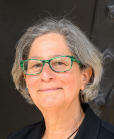
Susan Solomon, PhD
Massachusetts Institute of Technology
Susan Solomon is internationally recognized as a leader in atmospheric science, particularly for her insights in explaining the cause of the Antarctic ozone “hole”. She and her colleagues have made important contributions to understanding chemistry/climate coupling, including leading research on the irreversibility of global warming linked to anthropogenic carbon dioxide emissions, and on the influence of the ozone hole on the climate of the southern hemisphere. Her current focus is on issues relating to both atmospheric chemistry and climate change.
Susan Solomon is the Lee and Geraldine Martin Professor of Environmental Studies at the Massachusetts Institute of Technology. Prior to coming to MIT in 2012, she was a scientist at NOAA in Boulder, Colorado and an adjunct professor at the University of Colorado from 1982-2011. Solomon is widely recognized as one of the leaders in the field of atmospheric science. Her scientific papers have provided not only key measurements but also theoretical understanding regarding ozone destruction, especially the role of surface chemistry.
In l994, an Antarctic glacier was named in her honor in recognition of that work. In March of 2000, she received the National Medal of Science, the United States’ highest scientific honor, for “key insights in explaining the cause of the Antarctic ozone hole.”
She is the recipient of many other honors and awards, including the highest awards of the American Geophysical Union (the Bowie Medal), the American Meteorological Society (the Rossby Medal), and the Geochemical Society (the Goldschmidt Medal). She also received the Grande Medaille of the Academy of Sciences in Paris for her leadership in ozone and climate science in 2008 and the Crafoord Prize of the Swedish Academy of Sciences in 2018. Awarded by the King of Sweden, the Crafoord prize is considered the closest geosciences equivalent of the Nobel prize. In 2004 she received the prestigious Blue Planet Prize for “pioneering research identifying the causative mechanisms producing the Antarctic ozone hole”, and in 2013, she was honored as the BBVA’s laureate in the Frontiers of Knowledge award in the climate change category. She is also a recipient of numerous honorary doctoral degrees from universities in the US and abroad. She is a member of the U. S. National Academy of Sciences, the American Philosophical Society, and is a Foreign Associate of the French Academy of Sciences, the Royal Society, the Royal Society of Chemistry, and the European Academy of Sciences. Her current research includes climate change and ozone depletion. She served as co-chair of the Fourth Assessment of the Intergovernmental Panel on Climate Change (IPCC, 2007) climate science report, providing scientific information to the United Nations Framework Convention on Climate Change. She was named one of the year’s 100 most influential people in Time magazine in 2008.
In progress.
Plenary Lecture
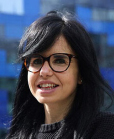
Jessica Wade, PhD
Imperial College London
Dr Jess Wade is a Royal Society University Research Fellow and Lecturer in Functional Materials in the Department of Materials at Imperial College London. Her research considers new materials for optoelectronic devices and quantum technologies, with a focus on chiral systems and the identification of strategies to control photon and electron spin. Outside of the lab, Jess is involved with several science communication and outreach initiatives. She is committed to improving diversity in science, both online and offline.
Wade has received many awards for contributions to science, science communication, diversity, and inclusion. In 2015, Wade was awarded the Institute of Physics Early Career Physics Communicator Prize and in 2016, the Institute of Physics’s Jocelyn Bell Burnell Medal and Prize for Women in Physics. In 2017, Wade won the Robert Perrin Award for Materials Science from the Institute of Materials, Minerals and Mining, and Imperial College’s Julia Higgins Medal in recognition of her work to support gender equality. In 2018, Wade won the Daphne Jackson Medal and Prize for “acting as an internationally-recognised ambassador for STEM”. Wade was awarded the British Empire Medal (BEM) in the 2019 Birthday Honours for services to gender diversity in science. Also in 2019, Wade was named as the 44th “Most Influential Woman in UK Tech” by Computer Weekly. During the same year, Casio released a scientific calculator in Spain bearing Wade’s picture in a series of 12 calculators commemorating historically notable female scientists. In 2023, Wade was awarded the President’s Medal for Outreach from Imperial College London for her work in promoting diversity in STEM.
In 2023, she was one of the six women chosen by Nature to comment on their plans for International Women’s Day. The others were Gihan Kamel, Martina Anto-Ocrah, Sandra Diaz, Aster Gebrekirstos and Tanya Monro.[75] Also in 2023, Wade was awarded the President’s Medal for Outreach from Imperial College London for her work in promoting diversity in STEM.
In 2024, Wade received a University Research Fellowship and the Rosalind Franklin Award from the Royal Society for “her achievements in functional materials and outstanding project which will support early career women scientists to pursue academic careers in materials sciences”.
In progress.
