
Opening Plenary Lecture
May 17, 2027 (time and location in progress)
2025 Nobel Prize in Chemistry

Omar Yaghi, PhD
Tsinghua University
Omar Yaghi received his Ph.D. in Chemistry from University of Illinois at Urbana-Champaign and was an NSF Postdoctoral Fellow at Harvard University. He is a University Professor and the James and Neeltje Tretter Professor of Chemistry at University of California, Berkeley. He is the Founding Director of the Berkeley Global Science Institute whose mission is to build centers of research in developing countries and provide opportunities for young scholars to discover and learn. He is also the Co-Director of the Kavli Energy NanoSciences Institute (Kavli ENSI) focusing on the basic science of energy transformation on the molecular level, the California Research Alliance by BASF (CARA) supporting joint academia-industry innovations, as well as the Bakar Institute of Digital Materials for the Planet (BIDMaP) which aims to develop cost-efficient, easily deployable versions of two classes of ultra porous materials – known as metal-organic frameworks (MOFs) and covalent organic frameworks (COFs) – to help limit and address the impacts of climate change.
His work encompasses the synthesis, structure and properties of inorganic and organic compounds and the design and construction of new crystalline materials. He is widely known for pioneering several extensive classes of new materials: Metal-Organic Frameworks (MOFs), Covalent Organic Frameworks (COFs), Zeolitic Imidazolate Frameworks (ZIFs), and Molecular Weaving. These materials have the highest surface areas known to date, making them useful for hydrogen and methane storage, carbon capture and conversion, water harvesting from desert air, and catalysis, to mention a few. The building block approach he developed has led to an exponential growth in the creation of new materials having a diversity and multiplicity previously unknown in chemistry. He termed this field ‘Reticular Chemistry’ and defines it as ‘stitching molecular building blocks into extended structures by strong bonds’. His work on MOFs, COFs, and ZIFs led to over 300 published articles, which have received a total of more than 275,000 citations and an h-index of 197.
Yaghi is an elected member of the U.S. National Academy of Sciences, German National Academy of Sciences Leopoldina, Indian Academy of Sciences, Italian National Academy of Sciences Lincean, Islamic World Academy of Sciences, European Academy of Sciences, Argentine National Academy of Sciences, Turkish Academy of Sciences, Academy of Arab Scientists, and American Academy of Arts and Sciences. He has also been honored with many awards, including the Sacconi Medal of the Italian Chemical Society (2004), Materials Research Society Medal (2007), American Chemical Society Award in the Chemistry of Materials (2009), Royal Society of Chemistry Centenary Prize (2010), King Faisal International Prize in Science (2015), Albert Einstein World Award of Science (2017), BBVA Foundation Frontiers of Knowledge Award in Basic Sciences (2017), Wolf Prize in Chemistry (2018), Eni Award for Excellence in Energy (2018), Gregori Aminoff Prize by the Royal Swedish Academy of Sciences (2019), August-Wilhelm-von-Hofmann-Denkmünze of the German Chemical Society (2020), Royal Society of Chemistry Sustainable Water Award (2020), VinFuture Prize (2021), Wilhelm Exner Medal (2023), Solvay Prize (2024), Tang Prize (2024), Balzan Prize (2024), IUPAC-Soong Prize for Sustainable Chemistry (2025), MRS Von Hippel Award (2025), Nobel Prize in Chemistry (2025), Crimson Distinguished Professor at Korea University (2026), RAK Shiekh Saud Award (2026), University at Albany Medal (2026), Ellis Island Medal of Honor (2026), Greatest American Immigrant by Carnegie Foundation (2026), and Forbes list of top Self-Made Americans (2026).
In progress.
Plenary Lecture
Check back soon for the date, time, and location.
R. S. Jane Memorial Award Winner
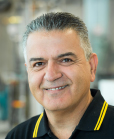
Savvas G. Hatzikiriakos, PhD
University of British Columbia
Dr. Savvas G. Hatzikiriakos is a Professor in the Department of Chemical and Biological Engineering at the University of British Columbia. He has made pioneering contributions to polymer rheology, and polymer processing. His research has significantly advanced the fundamental understanding of complex polymer flows, flow instabilities, and the relationships between molecular structure, rheological behavior, and processing performance.
Internationally recognized for his scientific contributions, Dr. Hatzikiriakos serves as Co-Editor-in-Chief of Physics of Fluids. He has authored over 300 refereed publications (17,500+ citations, h-index of 71). He is ranked among the world’s top 2% of scientists.
His scientific achievements have been recognized through numerous prestigious honors, including the Mason Award of the Canadian Society of Rheology. He is a Fellow of the Society of Rheology, the Canadian Academy of Engineering, and Engineers Canada. He has also made substantial contributions to research training of 90+ graduate and postgraduate students.
Dr. Hatzikiriakos has demonstrated exceptional leadership and service to the scientific community. He has served as President of the Canadian Society of Rheology and held various roles within the Society of Rheology. He has also organized several major international scientific conferences in Vancouver, including PRCR2001, SoR2005, CSChE2022, and PRCR2023.
In progress.