
CJCE recently published its latest virtual issue: Amplifying Global Research. Within this virtual issue, you will find the 5 top-viewed articles published between 2025 and 2026 from each of the following continents: Africa, Asia, Europe, North America, and South America. Over the next several months, we will be highlighting the articles from each of these sections in a series of CIC News stories as a means of spotlighting the excellent research being conducted across the globe in chemical engineering.
This month, we will be highlighting the articles in this virtual issue with corresponding authors from institutions within Asia. As many of the co-authors of these articles are from various regions, countries, and continents, this reflects the truly international collaboration that is taking place in chemical engineering research.
The first article in this virtual issue is a review article titled “Digital twins: Transforming the chemical process industry-A review” from Pratyush Kumar Pal, Abhiram Hens, Narottam Behera, and Sandip Kumar Lahiri. Here, the authors note that “digital twin (DT) technology represents a significant advancement in the digital transformation of the chemical process industry (CPI), offering innovative capabilities for real-time monitoring, predictive maintenance, and process optimization”. This article “investigates the current deployment status, frameworks, architectures, and applications of DTs within CPI, highlighting their transformative potential in improving operational efficiency, enhancing safety, and promoting sustainability.”
Next is another review article and is titled “Novel techniques in bio-oil production through catalytic pyrolysis of waste biomass: Effective parameters, innovations, and techno-economic analysis” from Behnam Rezvani. This article “scrutinizes catalytic pyrolysis for its ability to improve bio-oil characteristics through the use of catalysts and optimization of process conditions.” Ultimately, this “analysis aims to provide a holistic perspective on the economic viability and scalability of catalytic pyrolysis for bio-oil production” and “contributes to the very recent advancement of bio-oil production technologies, offering insights into optimizing process parameters and catalyst innovations.”
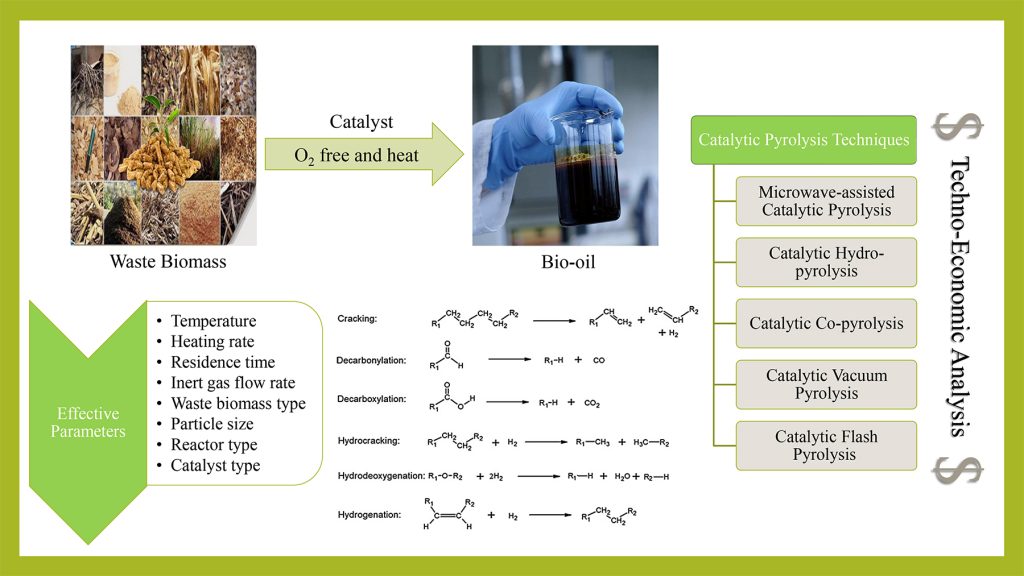
[Source: B. Rezvani, Can. J. Chem. Eng. 2025, 103, 3531.]
The third article in this section is another review article: “Transforming chemical process engineering: The role of AI and machine learning in revolutionizing process systems” by Somnath Chowdhury, Arnab Ghosh, Sayak Acharya, Somashish Saha, Pratyush Kumar Pal, Sumana Roy, and Sandip Kumar Lahiri. This review “examines the transformative impact of artificial intelligence (AI) and machine learning (ML) in advancing process systems engineering (PSE) within the chemical process industries” and “provides a comprehensive guide for researchers and practitioners, outlining strategies to harness AI/ML for sustainable and resilient operations in the chemical process industries.”
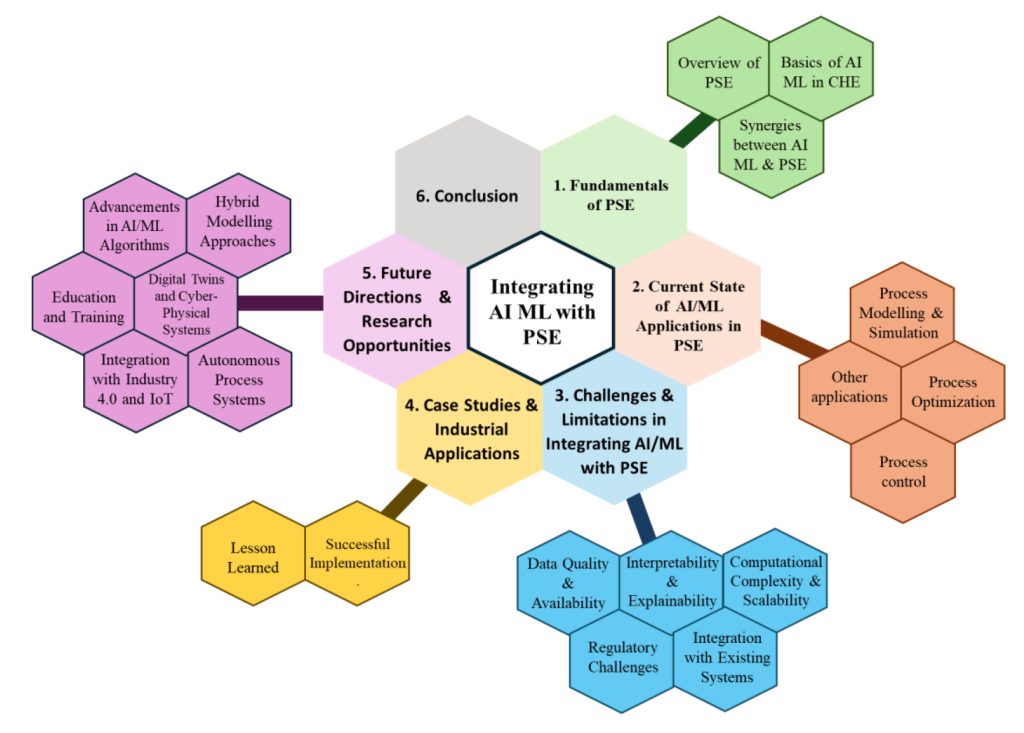
[Source: S. Chowdhury, A. Ghosh, S. Acharya, S. Saha, P. K. Pal, S. Roy, S. K. Lahiri, Can. J. Chem. Eng. 2026, 104, 699.]
Next is an open access research article titled “Impact of slug length in gas–liquid two-phase flow on the structural stress characteristics of horizontal rigid pipelines” from Abdalellah O. Mohmmed, Hussain H. Al-Kayiem, and Abderraouf Arabi. In this study, the authors note that “the intermittent passage of liquid slugs and gas pockets in slug flow generates substantial cyclic stress damage to piping systems and their supports”; however, “despite their critical implications, the structural response to slug-induced forces has not yet been thoroughly elucidated.” As a result, “this study addresses this gap through a comprehensive experimental investigation of the influence of slug length on the structural integrity of pipes.”
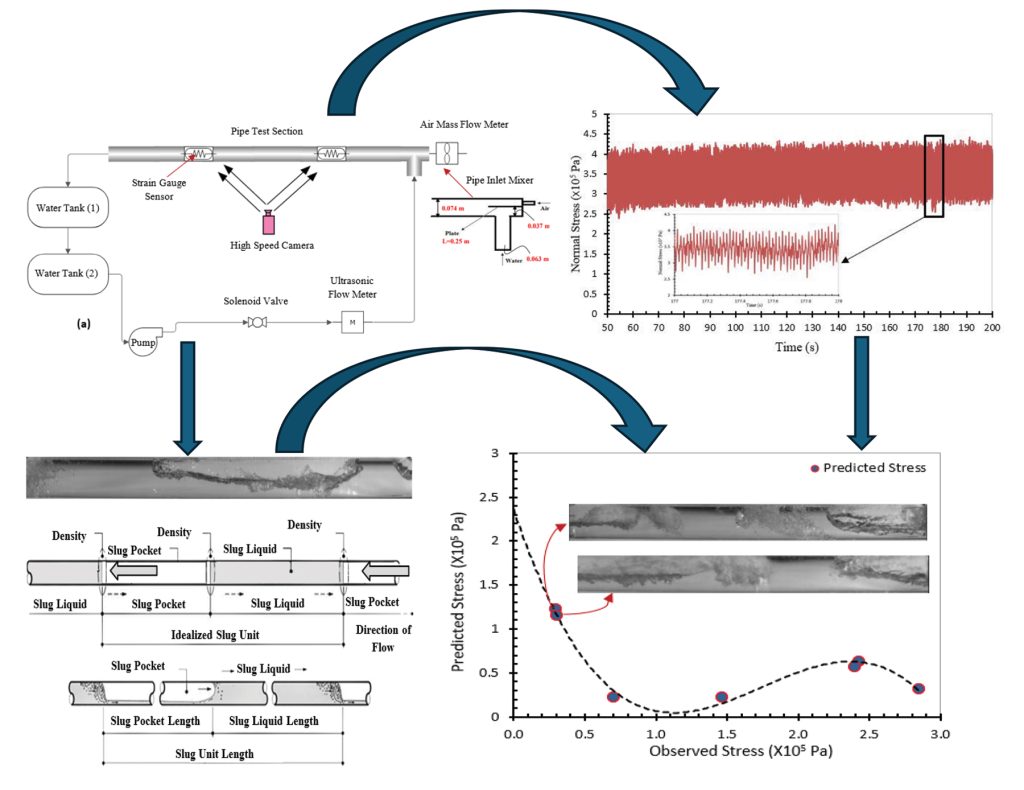
[Source: A. O. Mohmmed, H. H. Al-Kayiem, A. Arabi, Can. J. Chem. Eng. 2025, 103, 5124.]
Finally, this section of the virtual issue is concluded by a research article titled “Modelling and kinetics of the toluene/methylcyclohexanebased hydrogen storage system” by Jiahui Wang, Peiya Li, Shiyuan Wang, Shuhan Lu, Qinchuan Shi, Bin Wang, Xiang Gong, Fusheng Yang, and Tao Fang. The authors note that “the coupling of toluene and methylcyclohexane is one of the most promising liquid organic hydrogen carriers”; therefore, in this article “the kinetics models of toluene hydrogenation and methylcyclohexane dehydrogenation are established.”
One of the many benefits of publishing with CJCE is the availability of funding to authors for open access publication due to Wiley’s Transformational Agreements with funders and institutions across the globe. This includes institutions and consortia across Asia. For information on open access funding by country, see Wiley’s Open Access Accounts by Country or Location page.