
Plenary Session
Sunday, May 24 • Time • Location (In progress)

Kristi Anseth, PhD
University of Colorado Boulder
Kristi Anseth is a Professor of Chemical and Biological Engineering and Associate Faculty Director of the BioFrontiers Institute at the University of Colorado at Boulder. She currently holds the Tisone Professorship and is a Distinguished Professor. She received her B.S. degree from Purdue University (1992), her Ph.D. degree from the University of Colorado Boulder (1994), and completed post-doctoral research at MIT as an NIH fellow (1995-1996). Her research interests lie at the interface between polymer chemistry, biology, and engineering where she designs new biomaterials for applications in drug delivery and regenerative medicine. Dr. Anseth’s research group has published over 420 peer-reviewed manuscripts, and she has trained more than 150 graduate students and postdoctoral associates. She is an elected member of the U.S. National Academy of Engineering (2009), the National Academy of Medicine (2009), the National Academy of Sciences (2013), the National Academy of Inventors (2016) and the American Academy of Arts and Sciences (2019). Dr. Anseth has received more than 50 major awards and given 60 honorary lectureships. Her recent recognitions include the National Academy of Engineering Simon Ramo Founders Award (2025), American Chemical Society International Polymer Overberger Prize (2025), International Fellow of the Chinese Society for Biomaterials (2025), the VinFutures Special Prize for Women Innovators (2024), and the L’Oreal-UNESCO for Women in Science Award in the Life Sciences (2020). Dr. Anseth has served on the Board of Directors and as President of the Materials Research Society, Board of Directors for the American Institute of Chemical Engineers, the Board of Governors for Acta Materialia, Inc, Chair of the Board of Trustees for the Gordon Research Conferences, the National Institutes of Health Advisory Council for NIBIB, and as Chair of the National Academy of Engineering’s U.S. Frontiers of Engineering meetings and its Bioengineering Section.
Multifunctional and Dynamic Hydrogels for Biological Applications
Methods for culturing cells in biologically relevant, but defined materials are increasingly needed to expand and differentiate stem cells, grow tissues in vitro, or serve as injectable cell delivery systems in vivo. As a result, many researchers are realizing the advantages of synthetic hydrogels as a means of creating custom 3D microenvironments with highly controlled chemical, biological and physical cues. However, the native extracellular matrix (ECM) is far from static, so synthetic ECM mimics must also be dynamic or integrate non-linear behavior to direct complex cellular behavior. This talk will illustrate several examples of the development and application of poly(ethylene glycol) PEG hydrogels with adaptable and/or photoresponsive crosslinkers, especially those that impart unique material properties for biological applications. One example will illustrate the formation of hydrogels from bottlebrush polymers and how strain-stiffening mechanics facilitates the formation of protrusion-rich cell populations, which has been applied to study osteocyte networks found in bone. In another vignette, dithiolanes are investigated as PEG crosslinkers, producing biomaterials capable of multiple light-driven mechanical transformations including stiffening, softening, and photo-induced stress relaxation. Further, this same chemistry is exploited to provide controllable elasticity in highly dynamic dual-crosslinked hydrogels that also contain boronate ester bonds. These matrices are compatible with light-based biofabrication techniques, allowing for spatiotemporally templated encapsulation of cells that rapidly self-organize and colonize the synthetic microenvironment as a function of viscoelasticity. In a complementary approach, photoadaptable, allyl sulfide functionalized PEG hydrogels allow for the growth of intestinal organoids, and the subsequent application of photopatterned light to locally alter epithelial curvature, initiating symmetry breaking events, and ultimately directing cell fate. Finally, these cell matrix studies are complemented by the development of new materials and methods for photoexpansion microscopy, which enables optical clearance and super-resolution imaging of cells and their material interactions in 3D.
Plenary Session
Monday, May 25 • Time • Location (In progress)

Paul Dauenhauer, PhD
University of Minnesota
Paul Dauenhauer is the Distinguished University Professor, MacArthur Fellow, and Zsolt Rumy Innovation Chair at the University of Minnesota, Department of Chemical Engineering and Materials Science. He directs the Center for Programmable Energy Catalysis (www.cpec.umn.edu), as part of the Energy Frontier Research Center (EFRC) program of the Office of Science of the U.S. Department of Energy. He is the co-founder in 2016 of Sironix Renewables (www.sironixrenewables.com), focused on manufacturing of advanced surfactants and adjuvants made from plants. In 2020, he co-founded Lakril Technologies (www.lakril.com), that manufactures acrylic acids and esters from maize. In 2021, he co-founded Carba (www.carba.com) to manufacture solid carbon from the atmosphere. In 2025, his company ARC that produces chemical detectors including the PolyarcTM was sold to Shimadzu. Dauenhauer has been recognized for his work with several awards including the MacArthur ‘Genius’ Award, the Camille Dreyfus Teacher-Scholar award, and the Maria Flytzani-Stephanopoulos Award for Creativity in Catalysis.
An Emerging Industry of Programmable Chemical Manufacturing
The manufacturing of chemicals and fuels drives the modern economy for advanced materials, energy, medicines, and food. For the last two centuries, the traditional production strategy has reacted molecules down a fixed free energy gradient using a solid particle catalyst in large, capital-intensive processes. The alternative catalyst technology uses a dynamic free energy surface that accelerates and directs surface reactions to targeted products. Using light, charge, or strain under pre-determined multi-step input cycles (i.e., programs), programmable catalysts modulate the binding energy of reacting molecules on surfaces, dynamically altering the transition state of independent elementary reactions with time. The precise sequence of catalytic stimuli is designed and optimized for each catalyst, mechanism, and method of stimulus based on principles of ‘catalytic resonance theory,’ which identifies the natural frequencies of the controlling reaction elementary steps. This programmable manufacturing strategy provides opportunities for significantly accelerating reactions and producing highly pure products that will lead to novel chemical conversion technologies at new scales and applications with improved economics.
Plenary Session
Tuesday, May 26 • Time • Location (In progress)

Stacey Wetmore, PhD, FCIC
University of Lethbridge
Montréal Medal Winner
After receiving her BSc from Mount Allison and PhD from Dalhousie, Dr. Stacey Wetmore completed her postdoctoral studies at the Australian National University. She then accepted a faculty position at Mount Allison and subsequently moved to the University of Lethbridge. As a Tier I Canada Research Chair, her research uses the full spectrum of computational approaches and close collaborations with experimentalists to study how naturally occurring or environmentally-derived nucleic acid derivatives are processed in cells, and to design synthetic analogues with applications in medicine or nanotechnology. Dr. Wetmore is widely sought after to serve on national and international research, policy, and editorial boards, peer-review panels, society committees, and conference panels. She has contributed to boards overseeing funding programs, research computing resources, and broader support for the scientific community. Her strong committee work led to appointments as Chair for the Alliance Chemistry Resource Allocation Competition, the NSERC Chemistry Evaluation Group, NSERC Research Tools and Instruments, and NSERC Discovery Frontiers. She also holds leadership roles in scientific publishing, including co-Editor-in-Chief of our national chemistry journal. She advocates for equity, diversity, and inclusion, works to reduce bias in peer review, and supports research capacity at smaller institutions through student programming, training initiatives, and inclusive chemistry groups.
Abstract title: In progress
Abstract in progress.
Plenary Session
Wednesday, May 27 • Time • Location (In progress)

Uttandaraman (U.T.) Sundararaj, PhD, FCIC
University of Calgary
R. S. Jane Memorial Award Winner
Dr. Uttandaraman (U.T.) Sundararaj Sundararaj is Professor and Schulich Industry Research Chair in Polymer Multiphase Nanomaterials at the University of Calgary.
He has made transformative contributions to polymer science and is listed in the top 1% of researchers for EMI shielding, and nanocomposites, evidenced by highly-cited papers (4 papers >1000 citations), and pioneering research in polymer drop-breakup mechanisms and unique mixing designs. He has published 380 refereed publications (h-index =65, 21,000+ citations) and holds several patents in polymer processing and nanotechnology.
He has been honored with many awards, including the CIC Macromolecular Science and Engineering Award and the Morand Lambla Award from the Polymer Processing Society (PPS). He is a Fellow of five professional societies, including Canadian Academy of Engineering and Engineers Canada. He received the 3M Teaching Fellowship, Canada’s highest post-secondary teaching award, CIC Chemical Education award, and 25+ other teaching awards for teaching excellence and mentoring. He has He has mentored 159 researchers including 95 graduate and postdoctoral students.
He served as President, Vice-President, Local Section Chair and Student Advisor for CSChE. He served in other societies such as the PPS (International Representative and Awards Chair) and organized their annual conferences (CSChE2015, PPS2010) and symposia in AIChE, SPE).
Abstract title: In progress
Abstract in progress.
Plenary Session
Thursday, May 28 • Time • Location (In progress)
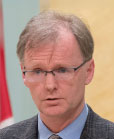
Michael G. Organ, PhD, MCIC
University of Ottawa
CIC Medal Winner
Michael Organ’s research program has made ground-breaking contributions to fundamental knowledge in Chemistry and Engineering that have empowered the discovery and manufacture of essential molecules, including pharmaceuticals, agrochemicals, and electronics. Bridging Chemistry and Engineering, Organ is internationally recognized as a seminal creator of flow chemistry for fine-chemical synthesis. His inventions in this field were put to the test during the pandemic when he was sought to hurriedly design a flow reactor to produce, at scale, a chemical key in test-kit manufacture required to help free the world from lockdown (NSERC Synergy and Governor General’s Innovation Awards). His painstaking mechanistic studies on the role of salt in Pd-catalysed cross-coupling was recognized internationally by C&E News as a ‘Top10 Discovery in Synthetic Chemistry’. His group was the leader in rational design of N-heterocyclic carbene ligands, producing a family of cross-coupling catalysts demonstrating unparalleled reactivity and selectivity. The impact of these catalysts is confirmed in >10,000 publications in multiple application areas highlighting the unique particularities of these catalysts, now distributed worldwide by >20 companies. The use of his ‘PEPPSI’ catalysts is described in >15,000 patent applications; Pd-PEPPSI-IPent was awarded (globally) ‘Reagent of the Year’ by Encyclopedia of Reagents for Organic Synthesis.
Abstract title: In progress
Abstract in progress.
