
The plenary sessions will be delivered in English.
Plenary Session

Michael Tam, PhD
Department of Chemical Engineering, Waterloo Institute for Nanotechnology
Michael Tam obtained his B.Eng. and Ph.D. degrees in Chemical Engineering from Monash University, Australia in 1982 and 1991 respectively. He spent 18 months on a postdoctoral fellowship at the Department of Chemical Engineering, McMaster University Canada, and subsequently taught at Nanyang Technological University, Singapore for 15 years. In June 2007 he joined the Department of Chemical Engineering, University of Waterloo as a tenured full professor, and holds the position of University Research Chair in the field of functional colloids and sustainable nanomaterials. He is an active member of the Waterloo Institute for Nanotechnology. His research interests are in colloids, self-assembly systems, polymer-surfactant interactions, and drug delivery systems. He has published more than 400 journal articles in various fields of polymer science and engineering. His total citation exceeds 31,994 and his H-index is 92. He is also a deputy editor of ACS Sustainable Resource Management.
Nanotechnology is anticipated to be the next technological wave that will drive many of the innovations in science and engineering. In this discipline, there is a renewed impetus to develop nanomaterials from renewable sources due to the negative impact of using raw materials from traditional carbon sources, such as crude oil. New opportunities in the use of sustainable and renewable materials for various advanced engineering applications exist, and cellulose nanocrystals (CNC) offer a new route to product development and formulations in many industrial sectors. Various functionalization strategies on the surface of CNC, such as with amphiphilic polymers, inorganic and metallic nanoparticles are being developed and exploited. The talk will focus on the strategies of CNC functionalization in imparting attractive properties critical for their applications. I will illustrate several innovations derived from the transformation of sustainable nanomaterials into platforms that address some of the market requirements and challenges. Some examples of the applications include wastewater treatment, anti-microbial system, conductive inks & fillers, agriculture, and water harvesting.
Plenary Session

Milica Radisic, PhD
University of Toronto
University Health Network
Dr. Milica Radisic is a Professor at the University of Toronto, Tier 1 Canada Research Chair in Organ-on-a-Chip Engineering and a Senior Scientist at the Toronto General Research Institute. She is also Director of the NSERC CREATE Training Program in Organ-on-a-Chip Engineering & Entrepreneurship and a co-lead for the Center for Research and Applications in Fluidic Technologies. She is a Fellow of the Royal Society of Canada-Academy of Science, Canadian Academy of Engineering, the American Institute for Medical & Biological Engineering, Tissue Engineering & Regenerative Medicine Society as well as Biomedical Engineering Society. She was a recipient of the MIT Technology Review Top 35 Under 35, Queen Elizabeth II Diamond Jubilee Medal, NSERC E.W.R Steacie Fellowship, YWCA Woman of Distinction Award, Killam Fellowship, Acta Biomaterialia Silver Medal, and Humboldt Research Award to name a few. Her research focuses on organ-on-a-chip engineering and development of new biomaterials that promote healing and attenuate scarring. She developed new methods to mature iPSC derived cardiac tissues using electrical stimulation. She is an Executive Editor for ACS Biomaterials Science & Engineering, Senior Consulting Editor for the Journal of Molecular and Cellular Cardiology, a reviewing editor for eLife and a member of the editorial board of another 8 journals. She served on the Board of Directors for Ontario Society of Professional Engineers, Canadian Biomaterials Society and McMaster University Alumni Association. She organized Keystone, EMBO and ECI conferences and numerous sessions at TERMIS and BMES meetings. She served as a Scientific Officer for the Canadian Institutes of Health Research and member of review panels for CIHR, NIH and Israel Ministry of Education. She is the Chair of Investment Committee for Serbia Innovation Fund. She is a co-founder of two companies TARA Biosystems (acquired by Valo Health), that uses human engineered heart tissues in drug development and safety testing, and Quthero that advances regenerative hydrogels. Her work has been presented in over 260 publications, garnering over 24,000 citations with an h-index of 77. Her publications appeared in Cell, Nature Materials, Nature Methods, Nature Protocols, Nature Communications, PNAS etc.
From Structure to Function: Immune Cells and Biomimicry in Vascularized Organs-on-a-Chip.
Developing stable and functional vascularized cardiac tissue remains a major challenge. In this presentation, I will focus on how organ-on-a-chip technologies can replicate organ functions, with a particular emphasis on the Radisic lab’s innovations, including the Biowire heart-on-a-chip, Angiochip and inVADE platforms for vascularizing heart and liver tissues as well as the substrates mimicking fractality of the glomerulus for kidney-on-a-chip applications. I will also discuss the integration of 3D printing and biofabrication to enhance the production throughput of organ-on-a-chip devices and to create new methods for cell cultivation on substrates that are soft, permeable, and mechanically stable.
I will highlight the use of co-culture, specifically the combination of four human cell types—endothelial cells, stromal cells, pluripotent stem cell-derived cardiomyocytes, and primitive macrophages (MΦs)—to create stable microvascular vessel networks in the cardiac tissue. Using fibrin-based tissues, we evaluated cardiac and vascular function in microtissues with two organ-on-a-chip platforms, Biowire and iFlow plates. Our results highlight the critical role of primitive MΦs in enhancing the functionality of vascularized cardiac tissues through direct cellular interactions and the secretion of matrix metalloproteinases, as well as pro-angiogenic and cardiac-supportive factors. This approach led to the formation of perfusable tissues with improved cell viability, enhanced contractility, and functional microvasculature within the cardiac tissue.
Plenary Session
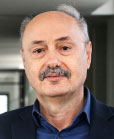
Angelos Lappas, PhD
Chemical Process and Energy Resources Institute (CPERI)
Angelos Lappas is Research Director at Chemical Process and Energy Resources Institute (CPERI) of Centre for Research and Technology Hellas (CERTH). CPERI/CERTH is a non-profit research organization located in Thessaloniki Greece. He holds a PhD degree in Chemical Engineering from the Aristotle University of Thessaloniki.
He is the Scientific Director of the Laboratory of Environmental Fuels/Biofuels and Hydrocarbons (LEFH) of CPERI/CERTH. The lab consists of 60 people (11 Researchers, 7 PhD students) and is the largest laboratory of CPERI. LEFH has major pilot plant and bench scale facilities that are recognized as unique in international scale.
He participated as main researcher, in more than 60 European and National research projects and he has 160 publications in ISI scientific journals, more than 250 papers in various symposia and conferences, 9500 citations and a SCOPUS h index 47.
Lappas has collaborated with more than 150 oil-refining, petrochemical, bio-refining and engineering companies all over the world and among them major companies like BP, EXXONMOBIL, CHEVRON, TOTAL, REPSOL, UOP, KBR, SAUDI ARAMCO, SABIC, BASF, VALMET, NESTE etc. The Industrial funding for the lab is more than 2 Million euros per year, while funding for EU/National; projects about 1 Million euros per year.
His research fields are: catalytic reaction engineering in refining processes, biomass thermo-chemical conversion processes, processes for production of new fuels, biofuels, e-fuels and chemicals; Catalyst poisoning characterization and deactivation; Catalyst evaluation from micro to pilot scale, CO2 catalytic conversion processes and Environmental catalytic processes (SOx, NOx, CO and CH4 reduction).
Navigating the innovations and challenges in catalysis and engineering of technology pathways leading to renewable fuels.
Rapid deployment of low-carbon fuels during the next decades will be crucial to accelerate the decarbonization of the transport sector that is the main cause of hazardous carbon emissions. Significant electrification opportunities are available for the road transport sector; the aviation and marine sectors however will continue to rely on fuel-based solutions for their decarbonization. Fuels obtained from electrolytic hydrogen (e-fuels) could be a viable pathway with fast scale up due to the expected massive expansion of cheaper renewable electricity and cost reductions of electrolyzes. Low-emission e-fuels can add to the diversification of the decarbonization options for aviation and shipping and co-exist synergistically with biofuels production, especially via the utilization of biogenic CO2.
In this presentation, we will present innovation and challenges in catalysis and engineering for some key technology pathways that lead to renewable fuels based on the research carried out in the Chemical Process and Energy Resources Institute (CPERI). Specifically, the following pathways would will be discussed:
Biomass/Wastes catalytic pyrolysis for the production of catalytic pyrolysis oils
An innovative technology for the production of pyrolysis oils based on catalytic flash pyrolysis using various solid feedstocks (for example biomass, waste plastics, tires) and catalysts will be discussed. This technology is based on circulating fluid bed (CFB) reactor with continuous catalyst regeneration. Two engineering approaches will be examined i) the in-situ catalytic fast pyrolysis and ii) the ex-situ catalytic upgrading of the pyrolysis vapors. Innovations and challenges in the reactor and catalytic technologies will be presented, along with the effect of various operating parameters on the quality and yields of the produced pyrolysis oils.
Upgrading of heavy pyrolysis oils through advanced slurry technologies with dispersed catalysts
Up to know, the produced bio-oils from the various thermochemical processes are very heavy and require upgrading to produce even marine fuels and (especially) aviation fuels (SAF). In CPERI, we have demonstrated the upgrading of sewage sludge-derived hydrothermal liquefaction oils using a continuous novel catalytic hydrotreating slurry technology with dispersed catalysts. Comparison of the slurry with a fixed bed reactor technology shows that the slurry hydrocracking is consistently more efficient in both heteroatom removal and cracking performance compared to the fixed-bed operation. This is ascribed to the higher residence time and the lower mass-transfer limitations in the slurry reactor that enhance the hydrogenation and cracking reactions.
Intensified Sorption-Enhanced Methods for CO2 Hydrogenation to Methanol
Among CO2 valorization technologies, the catalytic hydrogenation of CO2 to methanol (e-fuel) is a promising route that faces however challenges due to the thermodynamic stability and inertness of the fully oxidized CO2 molecule that restricts its conversion to low levels. We have demonstrated experimentally that water separation combined with catalytic conversion in a single step (sorption-enhanced CO2 hydrogenation) can alleviate thermodynamic limitations and significantly boost conversion. Introduction of a zeolite 13X as an efficient water sorbent along with the commercial Cu/ZnO/Al2O3 catalyst in the reactor leads to a prominent increase in the CO2 conversion and CH3OH yield. Another challenge in e-fuel production processes is the effect of the impurities present in the flue gases used as CO2 source. We will discuss in the presentation how the use of steel-work off-gases as CO2 source for methanol production can cause catalyst deactivation due to S, N, Na, Ca and Fe impurities that reduce the activity of a commercial CuO/ZnO/Al2O3 catalyst by blocking part of the Cu active sites.